
Watch The Wicker Man (1973): A Folk-Horror Classic
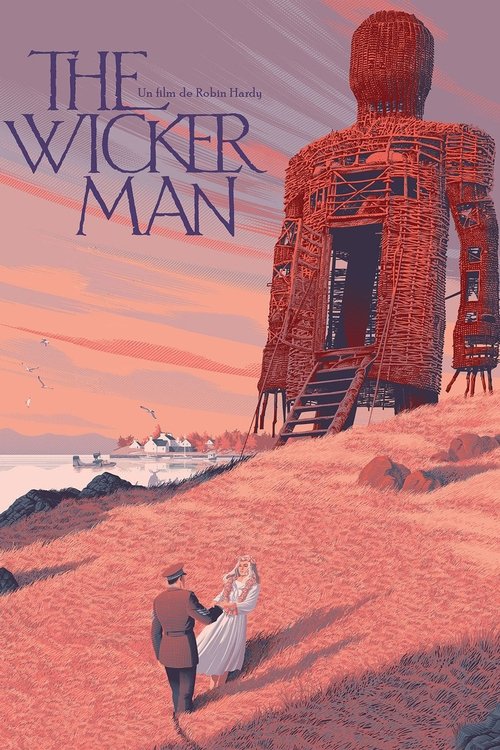
If you want to watch The Wicker Man (1973), you are about to discover one of the most unsettling and intelligent horror films ever made. This British folk-horror classic trades cheap scares for a slow, creeping dread that has haunted viewers for over five decades. Whether you are revisiting it or seeing it for the first time, here is everything you need to know about the film and where to watch The Wicker Man in 4K. The Wicker Man is a 1973 British folk horror film directed by Robin Hardy, starring Edward Woodward and Christopher Lee, widely regarded as one of the finest horror films ever made. InfinityTV includes it in a 150,000+ Movies & Series library.
What is The Wicker Man?
The Wicker Man is a 1973 British horror film directed by Robin Hardy and written by Anthony Shaffer. It has earned a place in cinema history as a defining work of the "folk horror" genre, a style that finds terror not in monsters or ghosts but in old traditions, rural isolation, and human belief.
The film is famous for its eerie atmosphere, its use of traditional folk songs woven directly into the story, and a tone that drifts between pastoral charm and something deeply wrong. It stars the legendary Christopher Lee, who often called it the best film he ever made.
A spoiler-free premise
A devout and strait-laced police sergeant travels to a remote Scottish island to investigate the disappearance of a young girl. What he finds is a tight-knit community whose pagan customs clash sharply with his own rigid Christian faith. The longer he stays, the stranger the islanders behave, and the more convinced he becomes that they are hiding a chilling secret.
That is all you need going in. The Wicker Man rewards viewers who let the mystery unfold slowly, so avoid plot summaries that reveal too much. The power of the film lies in the growing gap between what the sergeant expects and what is really happening around him.
The folk horror genre: what it is and why it endures
Folk horror is one of the most distinctive subgenres in horror cinema, and The Wicker Man is among its founding texts. Where conventional horror reaches for the supernatural — ghosts, demons, monsters — folk horror reaches for something older and in some ways more disturbing: the traditions, rituals, and belief systems that communities hold most sacred.
The genre typically involves an outsider entering an isolated community and slowly realising that the community's values and practices are alien to everything they know. The horror builds not from jump scares or gore but from the dawning recognition that the world is stranger and more dangerous than it appeared. The community is not simply evil in a cartoonish sense; they have reasons for what they do, beliefs that are internally coherent, and a conviction that they are entirely in the right.
This makes folk horror particularly unsettling because it implicates belief itself. The question the genre keeps returning to is not "are there monsters in the dark?" but "what are people capable of when they are certain they are correct?" That is a question that does not go stale.
The folk horror revival of the 2010s and 2020s — films like The Witch (2015), Midsommar (2019), and Men (2022) — drew explicitly on the tradition that The Wicker Man helped establish. None of them would exist in quite the form they do without it.
Production: Robin Hardy, Anthony Shaffer, and the making of a classic
The Wicker Man was produced by British Lion Films and shot largely on location in Scotland, in Dumfries and Galloway in the southwest of the country. Director Robin Hardy and screenwriter Anthony Shaffer collaborated closely on developing the film from David Pinner's novel Ritual (1967), substantially reimagining and expanding the source material.
Anthony Shaffer was already a celebrated playwright and screenwriter by the time The Wicker Man went into production. His play Sleuth (1970) had been a major theatrical hit and was adapted into a successful 1972 film. The Wicker Man screenplay is considered one of his finest works — structured with the precision of a mystery, layered with genuine theological and anthropological content, and building to a conclusion that is both shocking and, once you think about it, inevitable.
Robin Hardy was making his feature directorial debut. His approach was to treat the folk customs and pagan rituals in the film as authentic rather than theatrical — researching real pre-Christian British traditions and building them into the fabric of the island community. The songs that characters sing throughout the film were largely written for the production by Paul Giovanni, drawing on genuine folk tradition. The result is a film that feels ethnographically grounded, which makes the horror more disturbing than if the customs had been invented wholesale.
The production was troubled by budget constraints and a difficult shoot, and the film's initial release was further complicated by distributor interference that led to scenes being cut. Several versions of the film have circulated over the decades, with varying running times. The longer cut, often called the "director's cut," includes material that deepens the film's characterisation and pacing, and is generally preferred by those who have seen both versions.
Christopher Lee: his finest performance
Christopher Lee had one of the most remarkable careers in British cinema — a career defined by iconic monster roles in the Hammer Horror films of the 1950s and 1960s, particularly as Count Dracula, a role he played seven times. He was an actor of genuine intelligence and range who was frequently limited by the genre material he was offered.
The Wicker Man gave him something different. His role as Lord Summerisle, the charismatic, cultivated leader of the island community, is not a monster in the conventional sense. He does not have fangs. He does not lurk in the darkness. He is gracious, articulate, well-read, and entirely convinced of the rightness of everything he does. That conviction is what makes him frightening.
Lee spoke frequently in interviews about how much he valued the film and the role. He considered Lord Summerisle the finest performance of his career — a remarkable statement for an actor who had played hundreds of iconic characters across six decades. His admiration for the film was not sentimental: he pointed specifically to the quality of the screenplay and the opportunity to play a villain who did not feel like a villain from inside his own worldview.
Lee personally advocated for the film throughout his career, talking it up in interviews, pushing for its preservation and restoration, and helping to build the reputation that eventually made it a cult classic. Without his championing of the work, it might have remained far more obscure.
The role of Sergeant Howie, the investigating officer, was played by Edward Woodward. Woodward's performance is essential to the film's success: he plays a man whose rigidity and moral certainty are portrayed simultaneously as admirable and as his greatest vulnerability. The clash between Howie's Christianity and Summerisle's paganism is a genuine intellectual and dramatic collision, not a cartoon confrontation.
Summerisle: setting as character
The fictional island of Summerisle — shot across multiple locations in southwestern Scotland — is one of the most effective horror settings in cinema. It is not a dark, gloomy place. It is sun-soaked, colorful, inhabited by cheerful, seemingly friendly people who sing and dance and seem to be having a wonderful time. The gardens grow improbably lush fruit. The community is warm and communal.
This is deliberate and central to the film's horror strategy. Conventional horror signals its danger through visual darkness, isolation, decay, threatening architecture. The Wicker Man does the opposite. Everything looks lovely. Everyone is pleasant. The danger is completely invisible until it is not, and by then it is too late.
The island is named for Lord Summerisle's grandfather, who converted it from its original purpose and introduced the pagan traditions that now define it. That history — recent enough to be living memory, old enough to have become doctrine — is part of what makes the community so convincing. These are not ancient, timeless cultists. They are ordinary people who were taught to believe in specific things and who believe in them completely.
Cult classic status and lasting influence
The Wicker Man received a mixed initial reception — some critics recognised its unusual quality, others were baffled or dismissive. Its reputation built slowly, driven by word of mouth, home video, and an audience that responded to its specific combination of intelligence and unease.
By the 1990s and 2000s, it had been firmly established as a genre masterpiece, regularly appearing in polls of the greatest horror films ever made. In the United Kingdom it occupies a specific cultural position — a piece of national cinema that is simultaneously very British and deeply weird, rooted in the British landscape and tradition while being completely unlike anything else in British film history.
The influence on subsequent folk horror has been direct and acknowledged. Ari Aster, director of Midsommar, has cited The Wicker Man as a formative influence. Robert Eggers's The Witch operates in a related space. Ben Wheatley's Kill List (2011) brings the folk horror tradition into a contemporary British crime context. The genre has proven remarkably generative, and The Wicker Man sits at the root of the tree.
Why The Wicker Man is worth watching
Decades after its release, this film still feels fresh and genuinely disturbing. Here is why it endures:
- A masterclass in atmosphere. Instead of relying on gore or jump scares, the movie builds tension through bright daylight, cheerful songs, and unsettling details that slowly add up.
- Christopher Lee at his finest. Known for playing villains, Lee delivers a charismatic, layered performance as the island's enigmatic leader, Lord Summerisle.
- An unforgettable ending. The Wicker Man is celebrated for a climax that is shocking, inevitable, and impossible to forget.
- A huge cultural influence. Modern folk-horror hits owe a clear debt to this film, making it essential viewing for fans of the genre.
- Smart themes. The story explores faith, tradition, and the clash between belief systems, giving it real depth beneath the dread.
If you enjoy thoughtful horror that lingers in your mind long after the credits roll, this is a must-see.
Related folk horror films to watch next
If The Wicker Man draws you deeper into the folk horror tradition, here are essential films in the genre:
- Witchfinder General (1968): Another cornerstone of British folk horror, directed by Michael Reeves and starring Vincent Price. Set during the English Civil War, it shares The Wicker Man's interest in the intersection of belief and cruelty.
- Blood on Satan's Claw (1971): The third film often grouped with The Wicker Man and Witchfinder General as the "holy trinity" of 1970s British folk horror. Rural, menacing, and steeped in a very specific English dread.
- The Witch (2015): Robert Eggers's debut film is the most celebrated modern entry in the tradition — Puritan New England, religious terror, and the slow collapse of a family's certainty.
- Midsommar (2019): Ari Aster's folk horror epic transposes the Wicker Man premise — outsider encounters pagan community in a sun-drenched, picturesque setting — into a contemporary relationship drama. Deliberately and lovingly influenced by Hardy's film.
- Men (2022): Alex Garland's folk horror film draws on similar imagery and themes, set in the English countryside.
How to watch The Wicker Man in 4K
For a film this rich in mood and detail, picture quality matters. Many fans search for The Wicker Man streaming options only to find scattered availability across regions and services. The good news is that InfinityTV brings classics like this together in one place, in stunning 4K where available.
With InfinityTV you get:
- A massive 4K VOD library of 150,000+ Movies & Series from every major platform in one app.
- 22,000+ live channels alongside on-demand content.
- Playback on Firestick, Smart TV, Android, Apple TV, and phones.
- Instant activation so you can start watching in minutes.
- 24/7 support whenever you need a hand.
- A free 24-hour trial so you can test everything before committing.
Instead of juggling multiple subscriptions to find where to watch The Wicker Man, you can stream it and thousands of other titles from a single, easy-to-use service. If you love discovering hidden gems, explore our guide to the best IPTV for movies and series and our roundup of top series to watch for more recommendations.
Ready to dive in? Take a look at our flexible options on the pricing page and start your folk-horror journey tonight.
Frequently asked questions
Is The Wicker Man (1973) suitable for new horror fans?
Yes. The Wicker Man is more of a slow-burn mystery than a gore-heavy fright fest, which makes it a great entry point for viewers who prefer atmosphere and tension over graphic scares. Just be ready for a memorably dark finale.
Where can I watch The Wicker Man in 4K?
Availability varies by region across traditional streaming services. With InfinityTV you can access a large 4K VOD library in one app, making it easy to stream The Wicker Man 4K and countless other films without hopping between platforms.
Should I watch the 1973 original or the remake?
The 1973 original directed by Robin Hardy is widely considered the definitive version and the one praised by critics and Christopher Lee himself. For the full folk-horror experience, start there.
Which version of The Wicker Man should I watch?
Several cuts of the film exist with different running times. The longer "director's cut" version, which restores scenes removed by distributors before the original release, is generally preferred. It adds depth to the characters and strengthens the film's pacing.
Ready to watch in 4K?
Activate InfinityTV in minutes on WhatsApp — every match, 150,000+ movies and series, on all your devices.